


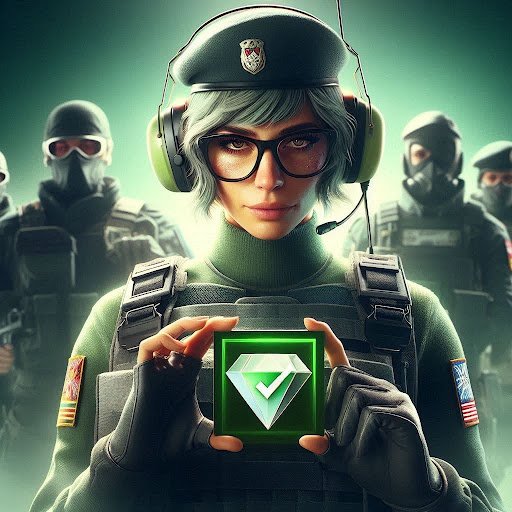
Hitting Emerald in Siege? It’s more than just being good at aiming; it’s about changing your tactics, talking to your team, and playing consistently. The game’s always changing, so getting to Emerald means you’re not just playing for fun anymore—you’re thinking about your moves. Reaching this rank shows you know the maps, how to use gadgets, and how to stay calm when things get tough, bridging as it does, advanced and elite gameplay. The climb requires more than grinding: it demands refinement. Operators must be selected with intention, communication must be clear, and every round needs to be played with a purpose. Those aiming for Emerald in Rainbow Six Siege must boost every layer of Siege’s core mechanics and apply them with precision.
Climbing the Ladder with Purpose
One of the biggest mistakes players make when trying to reach Emerald is treating every game the same. Siege is fundamentally a game of asymmetrical warfare, and treating a defense round like an attack—or vice versa—is a sure way to stagnate. To climb efficiently, you need to understand and execute your role within the team, whether that means setting traps as Lesion or clearing roamers with Buck. Each role you play has its own path to impact, and impact directly correlates to win percentage, which is the cornerstone of ranking.
Furthermore, relying solely on frags won’t get you far past Platinum. Emerald-level players don’t just score kills; they create opportunities. That might mean droning effectively, denying a plant with Smoke’s gas canisters, or using Nomad’s airjabs to punish flanks. It’s this layered approach to gameplay that defines Emerald-tier Siege. The smartest path to progression includes reviewing replays, identifying mechanical and tactical weaknesses, and adjusting operator choices based on map and enemy tendencies.
Consistency is a hidden weapon in your ranking journey. Emerald players do not necessarily win every match by dominating, but by maintaining a high floor of play. Even when you’re not performing at your peak, solid fundamentals like proper callouts, passive droning, and anchoring the site correctly can carry you. These small actions accumulate over the course of many rounds and make you an asset regardless of scoreboard performance.
Finally, climb with awareness of your play patterns. Are you losing the same gunfights repeatedly? Are you entry fragging without support? Self-analysis is what turns raw skill into smart play. Many Emerald players arrive not because they’re mechanically better than everyone else, but because they’re smarter about when and how to make decisions under pressure.

Key Stats and Map Awareness
Knowing the numbers helps. In Siege, games are often won on intel, not just instinct. The number of cameras destroyed, drones spotted, gadgets activated, and time survived all feed into success more than the average player realizes. Emerald-ranked competitors understand how to manipulate the map—when to reinforce certain walls, how to establish a crossfire on defense, or when to execute a coordinated push on attack. It’s not about always fragging out, but always contributing.
Certain maps, like Clubhouse or Oregon, reward structured team play, while others, like Border or Coastline, favor roam-heavy aggression. Adjusting your pace and operator selection accordingly is crucial. Teams that can adapt their strategies on the fly and rotate quickly between bomb sites are the ones that rise steadily through Emerald and beyond.
Tactical Habits and Decision-Making
Emerald-ranked players don’t hesitate when it counts. They pre-fire common angles, peek with purpose, and drone systematically. These aren’t habits developed overnight. They come from hours of thoughtful repetition and reflection. If you’re serious about climbing, you need to play like someone who belongs in Emerald—even before you get there. Every lost 1v1 or failed clutch is a data point to learn from, not a fluke.
Just as importantly, smart players know when to disengage. Siege is full of moments where patience is the better weapon, and chasing frags without intel can lead to round losses. Emerald players read the room. They know when to back off, when to go for the trade, and when to save utility for a final push. Tactical patience is often what separates the top 20% from the rest.
Ranked Match Checklist
- Warm up in Training Grounds or TDM before jumping into Ranked.
- Use mics or the quick communication wheel to relay vital intel.
- Main 2-3 operators per side and learn their roles deeply.
- Play around the bomb, not just for kills.
- Use drones and observation tools every round.
- Rewatch tough matches to identify common death spots.
- Take breaks after tilt-inducing losses.
- Queue with a coordinated squad when possible.
- Set goals per match (e.g., “Survive to execute,” “Deny plants”).
Operator Roles vs Rank Contribution
| Role Type | Best Operators | Contribution Focus |
| Entry Fragger | Ash, Iana | First kills, soft breach, roam clearing |
| Support | Thermite, Smoke | Breach denial, wall opening, smokes |
| Roamer | Vigil, Mozzie | Delay, flanks, intel denial |
| Anchor | Echo, Maestro | Site control, gadget utility, late round |
| Flex | Zofia, Jager | Situational impact, fill the needed gaps |
The Mindset for Emerald
One of the subtle yet critical differences at Emerald is mental resilience. You will lose rounds. You will get a headshot. But Emerald players don’t rage-queue or blame teammates. They adapt, they pivot, and they reset between rounds. Progress is about mindset as much as mechanics. Learning from your own mistakes—and even from your allies’—creates a self-correcting player who improves organically. Even those who utilize external coaching or services like SkyCoach will find that no boost can substitute long-term growth through awareness and adaptability.
Even your approach to losing streaks matters. Emerald-level players avoid downward spirals by shifting focus from outcomes to actions. Was the bomb left unguarded? Was there no refrag setup? Did the team split without a plan? These are the questions you ask. When you treat each match as a chance to improve one thing, not win at all costs, you ironically win more often.
Conclusion
Once you’re in Emerald, staying there is the new challenge. The enemies will be smarter, the tactics sharper, and the rounds tighter. You need to play cleaner, communicate more efficiently, and sometimes even adjust your playstyle mid-season. Meta shifts can affect operator pick rates, map rotations can favor different strats, and teammate coordination may fluctuate. The grind doesn’t stop at Emerald, but reaching it proves you understand the foundation of Siege.
In the end, Emerald is as much a state of mind as it is a rank. It means playing with clarity, executing with consistency, and improving with purpose. Whether you reach it solo, with friends, or with a little subtle support in your learning process, it’s one of the most satisfying achievements in Rainbow Six Siege.
